
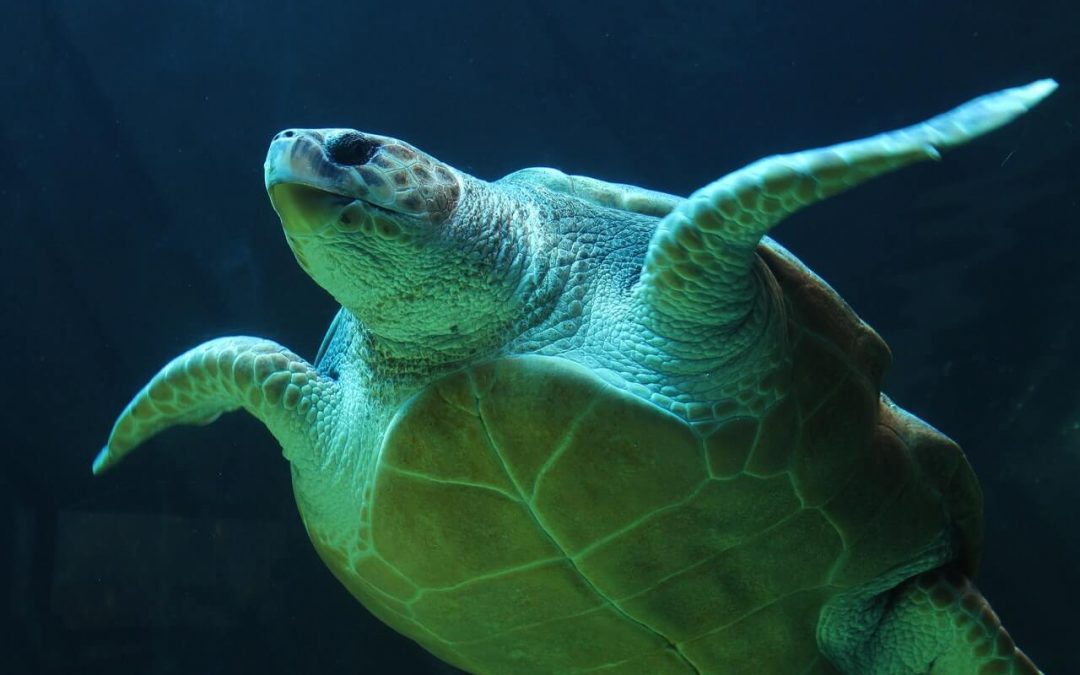
Worldwide, hundreds of thousands of sea turtles a year are accidentally caught in shrimp trawl nets, on longline hooks and in fishing gill-nets. Sea turtles need to reach the surface to breathe, and therefore many drown once caught. Loggerhead and hawksbill turtles are particularly vulnerable. Nearly all species of sea turtle are classified as Endangered. They are killed for their eggs, meat, skin and shells. They also face habitat destruction. Climate change has an impact on turtle nesting sites. As fishing activity expands, this threat is more of a problem.
The Endangered Species Act of 1973 (ESA; 16 U.S.C. § 1531 et seq.) is one of the dozens of US environmental laws passed in the 1970s, and serves as the enacting legislation to carry out the provisions outlined in The Convention on International Trade in Endangered Species of Wild Fauna and Flora (CITES). Designed to protect critically imperiled species from extinction, it was signed into law by President Richard Nixon on December 28, 1973. The U.S. Supreme Court found that “the plain intent of Congress in enacting” the ESA “was to halt and reverse the trend toward species extinction, whatever the cost.” The Act is administered by two federal agencies, the United States Fish and Wildlife Service (FWS) and the National Oceanic and Atmospheric Administration (NOAA).